Categories
Uncategorized

Blog #5

While many items stuck with me this semester, there was one quote from Cole’s Doing Documentary book that really hit home. He stated, “Who we are, to some variable extent, determines what we notice and, at another level of intellectual activity, what we regard as worthy of notice, what we find significant (Cole,89). This is particularly true in life and something I never stopped to think about prior to it being said out loud. What everyone notices are from a different perspective and that’s what makes people unique. Significance is also relative and what one views as being significant may not be what another thinks it may be. Though there is no right or wrong, it is all about perspective and the reality of one’s perspective. I highlighted and underlined this part when I first read it and have referred to it in conversations with even my family. With documentaries, they are just that; perspectives of what one considers relevant, important, and worth changing. from this point forward, not only will I take this into consideration, but I will also be more compassionate towards others. I have to remember that even in everyday school, such as working in a small group, what I notice and find significant may not be what someone else does, but it does not mean it’s wrong or irrelevant. In fact, taking other’s perspectives and looking through a different lens will enable me to be more open and empathetic with others. which in turn, will make me a better listener, friend and student.
Categories
Uncategorized

Blog #4

The choices I made for my short film revolved around what I believe is home. As mentioned previously, a house is a structure but a home is the people that embody it. After seeing so many documentaries, it became apparent that everyone has a different version of what a home is. At times, people’s home were ripped away from them, but when it came down to it, it was the people that once inhabited that home that were still together and creating memories. This project also revealed that location is associated with home, but not necessarily its physical boundaries. For my project, home was my family, and location was not about the four walls inside my home. Rather, it is the time spent and traditions and culture we create that make it our home. While I completely understand that this is my point of view and that others may not agree with what constitutes home, I believe now more than ever that location is both a physical and mental state and to really hone on in what makes home, one must actively be a participant within a larger framework called family. Again, family is an ambiguous word and not all have the same type of family; however, to me I chose the people who make it my home to represent how I feel about location.

Categories
Uncategorized

Blog #3

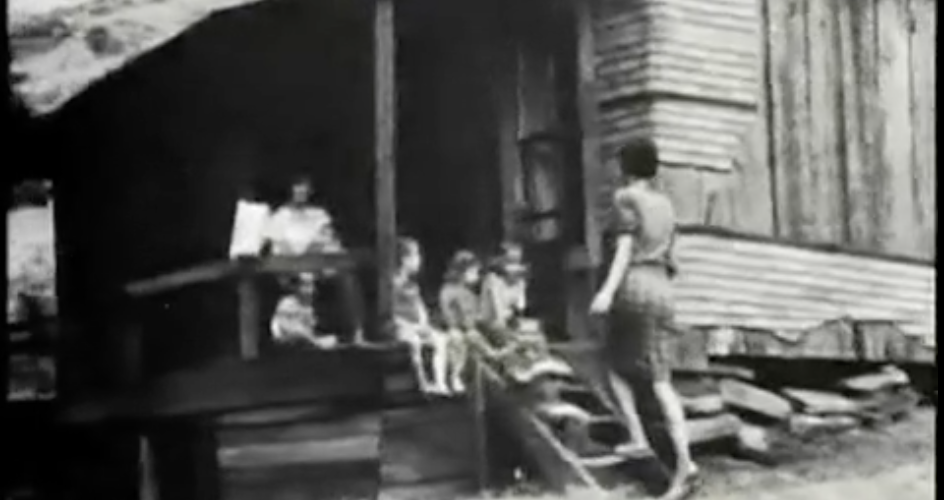
The moral/psychological tension is the moment that Hugh gets killed by Herbert for being on Herbert’s land. Moreover, what makes this even worse is that for a long time, the people in Kentucky thought that Herbert was a hero and was protecting himself; however, they were unaware of the true story behind the murder. What strikes me about this is how Hugh was there to do a specific job and he was seen as the “bad guy” even when he told Herbert he was leaving the premises. The tension in the film is specifically represented when Herbert took out the gun and pointed it at Hugh, and when Hugh turned his back and shot him anyway. This moment of shock is revealed to the viewer when Hugh goes down from behind and within moments is dead. Herbert continues on as if nothing happens and returns to his home. 

In  Coles, Doing Documentary Research, chapter two, Cole mentions that he understands the moral/psychological tension between what documentarians do and the people they observe. He even offers a conversation he has with Agee asking him if everything is so great for the people studied, why are we trying to change them? It is these questions that bring about the tensions between the two groups of people (one who reports/the other who essentially plays the role). To further it, Cole recalls one of the final moments in his own study with Mrs. Bridges when she turns to him and says, “I hope you don’t forget our people” (Cole, 64). Cole took this to heart and years later realized he did not at the time understand or value those words like he did later on. He is not one of the people studied and though his intentions may not have been poor, from the eyes of those he studied, he knew he never belonged and would never understand the way they felt.

Barret, as a Kentucky born woman,  believed she could do a better job than the other filmmakers because she lives amongst the people, unlike the others who came just for the purpose of filming. She did not have to pretend she was someone else to understand those around her. Her location is everything in this film, as location can make or break a documentary and in her eyes, her location as both a filmmaker and subject give her more credibility. Less tension is accrued in her situation because she understands the many sides to filmmaking. 

Categories
Uncategorized

Blog #2

In chapter one of Cole’s book, he references Agee’s work and how he became intertwined in a culture that consumed him and made it difficult for him to separate his personal life from his work life. Cole references location as “how a particular writer or researcher decides to commit himself or herself with respect to others being studied, watched, heard..(Cole, 32). With this idea, Agee became beyond committed so much so that he entered crisis mode, essentially pushing his original work aside and instead, took on a different role, a personal interest and investment in the individuals he surrounded himself with for both moral and personal reasons. Cole is successful in illustrating how location affected Agee in his work and how he could no longer follow a “script.” Instead, Agee needed to take a larger role aside from the magazine and instead of detaching himself from the situation he embedded himself even more so in it. As Cole discussed, Agee’s commitment displayed a side to him that most journalists avoid because it is not widely accepted. In many ways, Agee has made me think of times when I have lived amongst others that varied from my lifestyle and how I survived in those situations. While quite different from Agee’s situation, looking back, I realize that it is truly eye opening to surround oneself with others, seeing things from different perspectives, while trying to keep a neutral point of view. Finding empathy, being respectful and even shoeing a deep level of understanding of others has actually opened my eyes to a life in journalism/media. My idea of location will essentially be challenged as I continue on this journey, and like Agee, I hope to tell my truth, without being restrained by higher authorities in the business.

Categories
Uncategorized

Blog #1

After watching Strong Island, I was utterly shocked at how the entire investigation was conducted, meaning that instead of the victim finding justice, the criminal was not tried because of racial disparity. The documentary was informative and provided background for the victim and his family to show that he was an ordinary kid growing up in Long Island because his mother wanted a different life for them. The purpose of the documentary was to raise awareness about the social injustices that have been placed on people. As proposed by Aguayo, “documentary is a story of people unwilling to give up on the dream of an inclusive democracy, harnessing the use of moving images, the form of film, and the mode of documentary to represent their demands for a better world” (Aguyo). The victim’s brother Ford who created the film wanted to create a conversation around how and why so many people are threatened by people of different races. By creating his documentary, he opens the conversation and makes people aware of the disparities created and uses his brother’s death as an example of the injustices that have been put forth on his family and others in similar situations. What really took me by surprise was when Ford’s friend Kevin was placed in the back of a cop car and treated like a murderer while the shooter was not. Instead, the murderer was questioned outside of the cop car and then released. Though Ford’s film, as he stated, was not meant to investigate the crime itself, what it did do was create an arena for social change where people are made aware of the ongoing issues with race, crime, and inequality. Social change documentaries are meant to open the eyes of those who watch and for others to not necessarily become activists but to not be afraid of speaking up for change. According to Aguayo, communication is key in creating change, and Ford’s film provides that avenue for communication while leaving fresh images in the viewer’s mind. Not only was I captivated by the documentary and feel sick about the result, but it also reassured me that there are many issues with racial disparity even though we are in an era that craves change. Thankfully films like Ford’s can make others more aware of what goes on, and more people can be involved in creating change for the better.

css.php